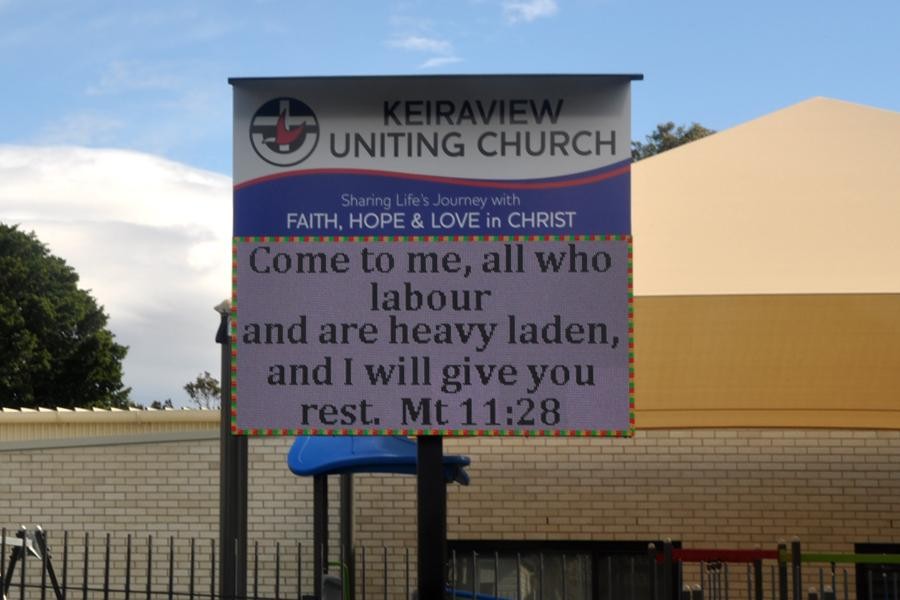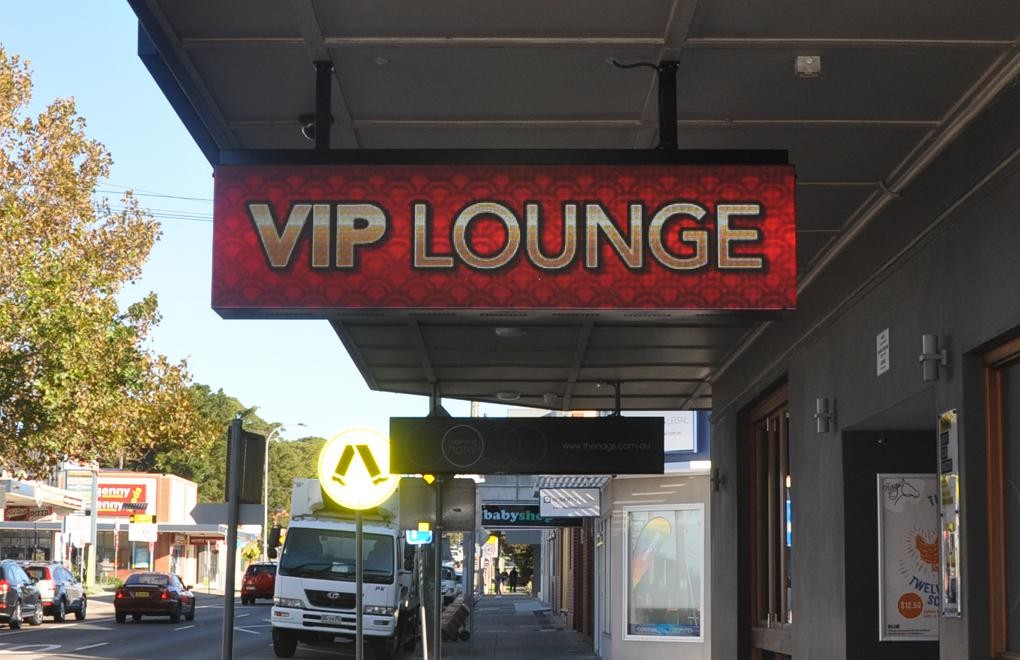

Why choose an Outdoor LED Sign?
Outdoor LED signs from SWS Signage are weather resistant, attention grabbing, and high brightness, maximising customer and content reach day and night.
LED signs are significantly more energy-efficient and durable than traditional neon and other electrical signage. They are also highly visible, versatile, and cost-effective. Importantly, LED displays tend to capture more attention, as people are conditioned to associate them with important, real-time information – such as traffic updates, airport flight boards, and train timetables – making them a powerful communication tool.
LED technology is also highly reliable, long lasting and requires minimal maintenance. Additionally, LED sign content can be updated at the push of a button, thereby eradicating the expense of having to replace outdated static signs.
If you’re looking to promote your venue with high-impact, regularly updated content, an outdoor digital advertising board could be the ideal solution. With real-time, cloud-based programming and a range of pixel pitches to suit different budgets and locations, SWS Signage offers a complete selection of outdoor LED screen solutions. Whether you need a small display or a large-scale board, we can help. For tailored pricing and project-specific costs, get in touch with our team.
About SWS Signage outdoor LED display signs
Outdoor digital LED signage has evolved significantly over the past decade, offering more dynamic and impactful ways to communicate with your audience. Today’s technology delivers vibrant, eye-catching displays that engage customers and patrons far more effectively than traditional signage. An outdoor LED billboard is one of the most powerful tools to extend your reach and connect with consumers in a meaningful way.
With over 40 years of experience, SWS Signage has been a trusted provider of outdoor digital signage solutions. We pride ourselves on delivering high-quality, reliable, cost-effective, and innovative products backed by strong technical expertise and ongoing support.
By importing our outdoor digital signage directly from the manufacturer, we’re able to supply spare parts at the time of purchase. This ensures better colour consistency over time, reliable access to replacement components, and confidence in long-term performance. Combined with our extensive industry experience, we provide dependable support and tailored solutions for LED signage projects across Australia.
SWS Signage is committed to making LED technology accessible and easy to use for our customers. We provide comprehensive training and hands-on technical support, working closely with our experienced team to ensure you get the most out of your LED signage projects. We also offer indoor LED signs, giving you versatile solutions for both interior and exterior environments.
When you choose an LED sign from SWS Signage, whether outdoor or indoor, you’re in good company. We’ve delivered LED screen and signage solutions for clients such as Markets Hotel Homebush, Gateshead Tavern, Bateau Bay Hotel, The Doylo, Fowlers Carpets, Belmont 16’ Sailing Club, Central Coast Mariners, Storaway Somersby as well as various schools and churches throughout NSW, helping them engage their audiences with vibrant, high-impact displays.
Contact SWS Signage today to enquire about an outdoor LED sign for your business today and discuss your project or any other signage needs you have with our experienced team today.
Industries Outdoor LED display signs can benefit from the most:
-
Schools (Green Square Public School Zetland, St John Vianney Morisset, Tamworth High School, Hunter River High, Irrawang high, Belmont High, Hunter Sports High, St Pauls Primary School Gateshead)
-
Pubs and clubs (Markets Hotel Homebush, Gateshead Tavern, Bateau Bay Hotel, Nags Head Hotel, Chelsea Hotel Chatswood, Royal Oak Hotel Lidcombe, Royal Hotel Singleton, and Laurieton United Sports Club)
-
Churches (St Johns Cessnock, St Lukes Wallsend, St Francis, and St Pauls Gateshead)
-
Shopping centres (Kincumber Property Group, Provodores Warners Bay, and Amcal Kanwal)
Outdoor LED Signage FAQs
How much does an outdoor LED sign cost?
There is no single price for an outdoor LED sign because every display needs to be specified for the site where it will operate.
The main factors affecting digital signage cost are the screen size, pixel pitch required for the viewing distance, whether the display is single or double sided, and how it will be installed (for example, wall mounted, pole mounted, or incorporated into a pylon sign).
The cost of outdoor LED signage can also vary substantially depending on the quality of the components and how the display has been engineered. Lower-cost products may achieve the required outdoor brightness by driving lower-grade components harder, which can reduce the working life of the screen.
SWS Signage specifies each display around its location, viewing requirements, and intended use rather than applying a one-size-fits-all price. Contact our team with details of your site and we can recommend the right solution and provide project-specific pricing.
Do I need council approval for an outdoor LED sign?
It depends on the council, the site, and the type of outdoor LED sign being proposed.
Requirements for illuminated and digital signage vary between local government areas and planning zones. Factors commonly considered include the size and location of the display, its brightness, its proximity and orientation to roads, and the type of content being displayed.
Any approval requirements should be identified early in the project so they can be factored into the design and installation program.
How long does it take to get an outdoor LED sign installed?
There is no single installation timeframe because the program depends on the size and complexity of the display, site conditions, approvals, and the type of mounting structure required.
A typical digital signage installation progresses through four main stages: site assessment and measure, artwork and engineering sign-off, manufacture or supply of the display, and finally installation and commissioning on site.
Once SWS Signage has assessed the location and project requirements, we can provide a clearer indication of the expected project program.
Can we update what the screen shows ourselves?
Yes. SWS outdoor LED displays use real-time, cloud-based programming, allowing authorised users to update content remotely without arranging for a technician to change the message.
That means promotions, events, trading information, and other content can be updated when required, without the recurring printing and installation costs associated with changing static signage.
SWS Signage also provides training and hands-on technical support when the screen is installed, so the people responsible for managing the display understand how to use it confidently.
For businesses considering a broader digital display system, you can also explore our LED screen solutions.
What happens if part of the screen fails?
Long-term support and spare-parts availability are important considerations when choosing LED display signage.
SWS Signage imports its outdoor digital signage directly from the manufacturer, allowing spare components to be supplied at the time of purchase. This helps maintain colour consistency when replacement modules are required and provides greater certainty that compatible components are available when needed.
Our involvement also continues beyond the initial installation. If a problem develops, you can deal directly with the team that supplied and installed the display rather than having to source support from an unrelated third party.
What size screen do we need?
The right screen size depends mainly on how far away your audience will be and the type of content you want them to read or view.
For text, a useful guide is that a character height of around 140 mm can be read from approximately 70 metres. For still images and basic graphics, the maximum viewing distance is typically around 100 times the height of the screen. For animated or video content where more detail needs to be visible, around 30 times the screen height is a more practical guide.
These figures are explained in more detail in the technical FAQs below.
If you are unsure what size outdoor LED sign will suit your site, tell us the location, frontage, intended viewing distance, and the type of content you want to display. We can work the screen size and pixel pitch back from those requirements.
Do outdoor LED signs use a lot of power?
LED technology is generally more energy efficient than traditional neon and other electrical signage, while also requiring relatively little ongoing maintenance.
The actual running cost of an outdoor LED sign depends on factors including the physical size of the screen, brightness settings, and how many hours each day it operates.
Once the screen specification and intended operating hours are known, SWS Signage can provide a more useful indication of likely power requirements rather than relying on a generic estimate.
Do you install outside Newcastle?
Yes. SWS Signage services NSW wide, with a particular focus on Greater Sydney, the Central Coast, and Newcastle. We also regularly complete projects from Wollongong through to Coffs Harbour.
Other locations are considered on a project-by-project basis, so it is worth contacting our team even if your site falls outside those areas.
For projects involving other types of exterior signage, you can also view our range of outdoor signs.
Can an LED screen be added to a pylon sign?
Yes. Integrating an outdoor LED screen into a pylon sign is a common solution for businesses that need strong visibility from the road while also being able to change their message regularly.
SWS Signage has built new pylons incorporating LED displays, refurbished existing pylons to accommodate new screens, and replaced ageing LED displays in pylon structures installed many years earlier.
If you are considering a complete freestanding structure rather than a wall-mounted display, our pylon signs page explains the structural signage options in more detail. You can also view completed LED and pylon installations in our project gallery.
What is an LED sign?
An LED sign is an energy efficient , durable, highly visible display that uses LEDs to illuminate text, images and animations.
They are versatile and low voltage digital displays that allow businesses to catch the attention of customers and are able to change content and update information in real time.
What does LED stand for?
LED stands for Light Emitting Diode.
How does an LED display work?
An LED screen is made up of hundreds of tiny light-emitting diodes (LEDs) controlled by a central system. In scrolling displays, these LEDs are switched on and off in sequence to create the illusion of movement.
For full-colour screens, the LEDs are grouped into clusters of red, green, and blue diodes, which combine to produce a wide spectrum of colours. Each LED functions as a pixel, and together they form images, text, and video content.
What Is A Pixel?
On an LED display, each pixel emits a single point of light or colour. The spacing between these pixels – known as pixel pitch – varies depending on the intended viewing distance, with closer spacing used for near viewing and wider spacing for longer distances. In DIP LED displays, each pixel is typically composed of three individual LEDs – red, green, and blue – which work together to produce a full range of colours.
What is a scrolling LED sign?
Also known as ticker signs, scrolling LED signs display text that moves from right to left across the sign. This attracts the attention of the reader and allows a longer message to be displayed.
What is an RGB Screen?
RGB stands for red, green, and blue. An RGB screen is a full colour screen that uses various combinations of these three colours to create up to 16 million colours and shades. Today, most LED digital signs and screens are RGB unless a specifically designed solution is required, as the cost of the components is negligible in comparison to the entire display manufacturing cost.
How long does an LED sign usually last?
A high-quality LED display sign can last up to 100,000 hours; however, this figure refers to the point at which the LED’s brightness has reduced to around 50% of its original level. While LED signs are known for their long lifespan, reaching this benchmark depends on several factors, including the quality of components, drive current, assembly standards, and operating conditions such as ambient and junction temperatures.
100,000 hours equates to more than 11 years of continuous 24/7 operation. This highlights the strong value of outdoor LED signage, which remains a cost-effective solution even if it doesn’t fully reach this maximum lifespan.
However, longevity is heavily influenced by operating conditions – particularly the junction temperature of the LED chip. To achieve optimal performance, this temperature must be kept within the manufacturer’s recommended range. Even small increases can have a significant impact: a rise of 10°C can reduce the time to 50% brightness to around 80,000 hours, while a 30°C increase can shorten it to just 12,000 hours.
What is ambient temperature?
Ambient temperature refers to the temperature in a room or the surroundings of an object under discussion. In an LED sign, the ambient temperature is the temperature within the cabinet and should be controlled using temperature-sensing technology.
What is junction temperature?
Junction temperature is the temperature at the point where an individual diode connects to its base. Maintaining the correct junction temperature is important to the longevity of an LED display.
What is the difference between an LED Display Sign and an LED TV?
An LED TV is an LED Display Screen that uses backlighting rather than fluorescent tubes.
What is the difference between Outdoor LED Displays and Indoor LED Displays?
SWS Signage offers both indoor LED signs and outdoor LED signs, so whichever works best for your signage needs, SWS Signage can deliver.
Indoor LED displays are generally designed for controlled environments and therefore do not require weatherproofing, vandal resistance, or specialized cooling systems. Since they are typically installed in air-conditioned spaces, they also operate at lower brightness levels compared with outdoor displays.
For an outdoor display, considerable price differences can be seen in the market, and this is the biggest purchase risk. Firstly, an outdoor display has to be six times brighter than an indoor display to be seen in sunlight. This can be achieved with high quality components or by using lower-cost components and overpowering the LEDs to make them brighter, which shortens their real-life.
Secondly, the display has to be environmentally rugged, and a low-cost import product may not consider the display installation, ventilation or orientation to the sun and associated heat soak. An outdoor digital LED display can vary by 300% in cost from a low cost generic import to a purpose-designed solution.
What is the maximum distance at which an Outdoor LED Display Screen would be readable?
TEXT – For text, as a rough guide, halving the text height equates to the viewing distance in metres. For example, 140mm text height is suitable for viewing to 70M, and the row spacing between text should be at least one-third for maximum visibility. The size of the text, the number of lines, and the row spacing allow you to establish the display height required.
IMAGES – For image based content, being still low resolution images such as basic pictures and logos, typically the maximum viewing distance is 100x the height of the screen to be able to interpret the content being displayed.
VIDEO – For animated and live video content, typically the maximum viewing distance is 30x the height of the screen to be able to interpret the detail in the content being displayed.
What our customers say
“The impact of our new outdoor LED screen for our recently opened beer garden has been a huge success”
Wests Country Club Gledswood Hills · Outdoor LED screen, view the project
“The new LED installed by SWS Signage to our existing framework has made a huge statement. We are thrilled with the result!”
Markets Hotel Homebush · Double-sided LED screens, view the project
Outdoor LED Screen Technical Specifications

P8 Pixel Pitch Front Service Outdoor
PDF Document / 1544.77KB
P6.67 Pixel Pitch Front Service Outdoor
PDF Document / 1542.6KB
P4.8 Pixel Pitch Video Capability Front Service Outdoor
PDF Document / 1483.5KB
clients